
Important: Burying traps in the soil for several days eliminates manufacturing and human scents.
- Locate a tunnel or mound that indicates recent mole activity. (During dry periods, moles often stay inactive)
- With a hand trowel, dig a circular or oval hole 6-8 inches in diameter and deep enough to reach the base of the cross tunnels.
- Set the trap by squeezing the coiled end and placing the ring perpendicular, about 1¾ inches from the end of the tongs (figure 1a & b)
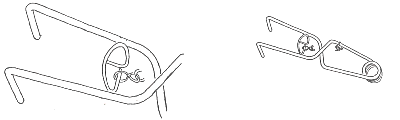
Fig. 1a (top view of tongs)
Fig. 1b (top view of trap in set position)
Fig. 1b (top view of trap in set position)
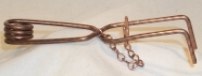
Carefully clean out each tunnel with the end tongs of the set trap until it can be freely inserted. Failure to clean the tunnel adequately may cause the trap to become sprung and plugged.
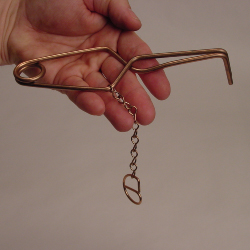
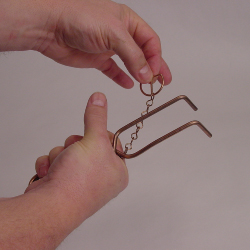
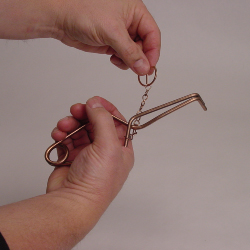
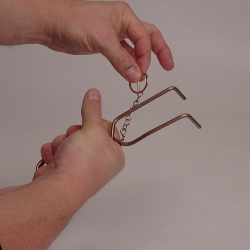
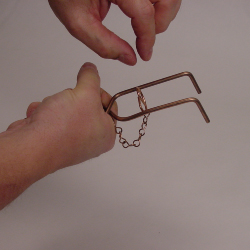
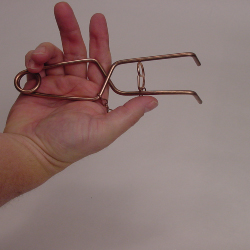
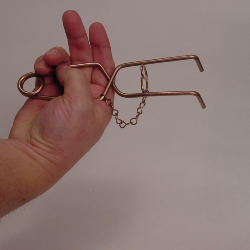
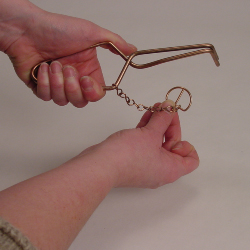
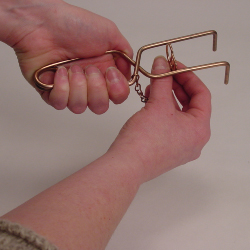
4. Place the SET trap into the tunnel with the tongs pointing downward. (figure 2)
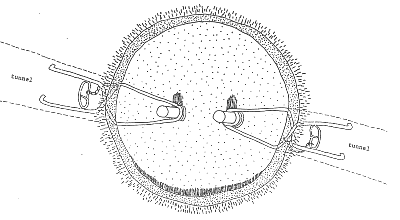
5. Secure trap by placing the ¼" dowel through the opening of the four-coiled spring and into the soil so that the tip is just visible above the ground but deep enough so that it will not be affected by the lawnmower.
6. Repeat steps 4 and 5 for the other tunnel, using a second trap.
7. After the traps have been properly set, take grass sod and place it diagonally over the trap and opening of the tunnel. The grass blades point toward the trap. Repeat the procedure for the other trap. Fill in the hole with loose dirt. (figure 3)
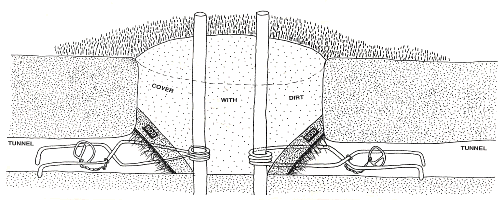
Fig. 3 (side view)
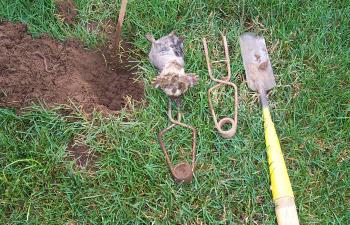
8. Check the traps every 2-3 days or after a rain. Remove the loose dirt and then lift the sod to see if each trap contains a mole or if is snapped.
9. If the trap(s) are not snapped, then replace the cover as indicated in step 7.
*Caution: Do not set the traps in any locations where children or pets play.